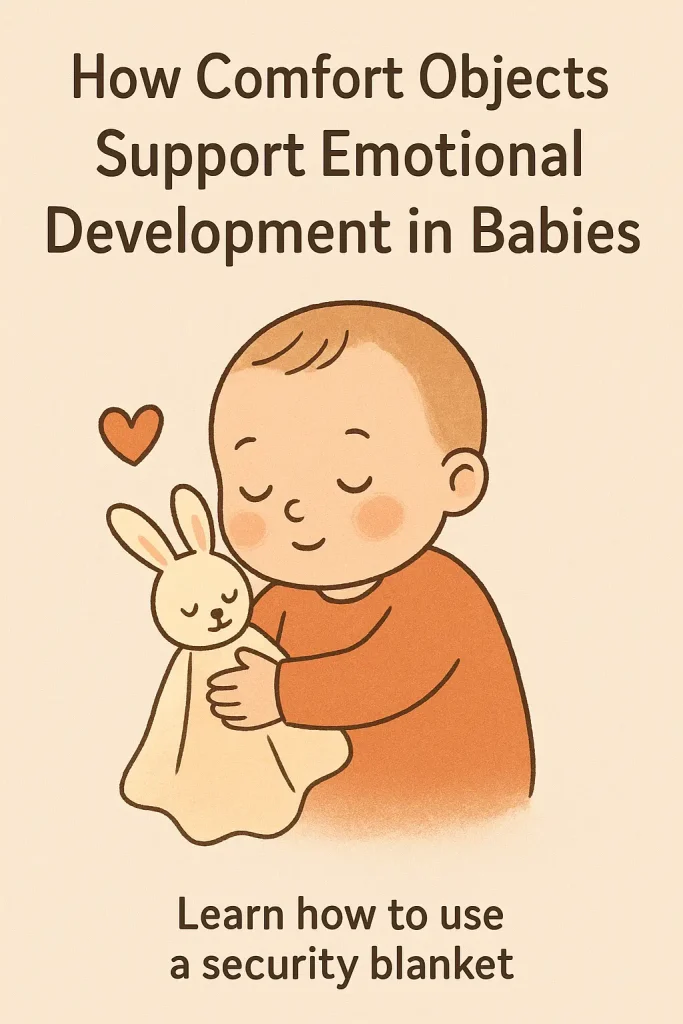
How Comfort Objects Support Emotional Development in Babies
Comfort objects — whether it’s a soft lovey blanket, a plush toy, or a tiny fabric square — play a bigger role in your baby’s world than you might realize. These special items help foster baby bonding and emotional growth, offering reassurance during times of stress or change.
What Are Comfort Objects?
Comfort objects are familiar items that help babies feel safe and secure, especially when separated from their caregivers. Known as “transitional objects,” they serve as emotional bridges — soothing babies as they develop independence and confidence.
From a beloved lovey blanket to a stuffed bunny, comfort objects provide consistent warmth, texture, and scent that remind babies of home and love.

The Science of Emotional Growth and Attachment
During the first years of life, infants form emotional connections that influence how they relate to others later on. Research in emotional growth shows that secure attachments help babies develop self-soothing skills and trust in their environment.
Comfort objects act as tools in this process — serving as emotional stand-ins when parents are not immediately present. The baby learns to calm themselves, promoting both independence and resilience.
Why Comfort Objects Are So Effective
- Familiar Scents: Babies recognize their parents’ scent. A lovey blanket that smells like mom or dad can instantly calm a fussy infant.
- Soft Texture: The tactile sensation provides a sense of stability and comfort during transitions, such as bedtime or daycare drop-off.
- Predictability: Using the same comfort item daily reinforces feelings of safety and consistency.
Comfort Objects and Baby Bonding
Baby bonding isn’t just about physical closeness — it’s about emotional connection. A comfort object can help strengthen that bond by extending the caregiver’s presence throughout the day and night.
Many parents introduce a lovey blanket around 6–12 months, once their baby begins forming attachments and understanding object permanence. This is the age when babies start to miss their parents but can use familiar items to feel reassured.
Encouraging Emotional Growth Through Routine
Building emotional growth takes time and consistency. Including comfort objects in your baby’s daily routine — naps, bedtime, car rides — helps them feel grounded and safe.
Try incorporating your lovey blanket during cuddle time or bedtime stories. Over time, your baby will begin associating the item with peace and relaxation, which reinforces positive emotional habits.
How to Choose the Perfect Comfort Object
- Safety first: Choose a breathable, washable material without small parts.
- Soft texture: Gentle fabrics like cotton or velvet feel comforting to sensitive skin.
- Easy to clean: Babies love to chew, cuddle, and carry their comfort object everywhere — so pick something durable.
Our Bunny Lovey Blanket was designed with both comfort and safety in mind — combining ultra-soft fabric with baby-safe stitching. It’s a perfect companion to nurture baby bonding and promote emotional growth.
Where to Get a Lovey Blanket
Looking for a high-quality lovey blanket that’s gentle, adorable, and safe? Explore our Bunny Lovey — available now on Amazon. Loved by parents for its soothing texture and thoughtful design, it’s an ideal comfort object to support your baby’s development journey.
Comfort objects are more than just toys — they’re powerful emotional tools that help babies transition toward independence with confidence and love. By choosing the right lovey blanket, you give your child a lifelong gift of emotional stability and comfort.