
Introduction: What Self-Soothing Really Means
Every parent wants their little one to sleep peacefully — but when your baby wakes up frequently, cries between sleep cycles, or struggles to settle, it can leave you exhausted and overwhelmed. That’s where baby self-soothing comes in.
Self-soothing isn’t about leaving a baby alone or ignoring their needs. Instead, it’s about gently guiding your child to develop the ability to settle their body, regulate their emotions, and fall asleep with confidence. When done respectfully, these skills support long-term security, healthier sleep patterns, and emotional development.
This guide will walk you through gentle, developmentally appropriate ways to teach self-soothing, using approaches backed by sleep science and infant psychology.
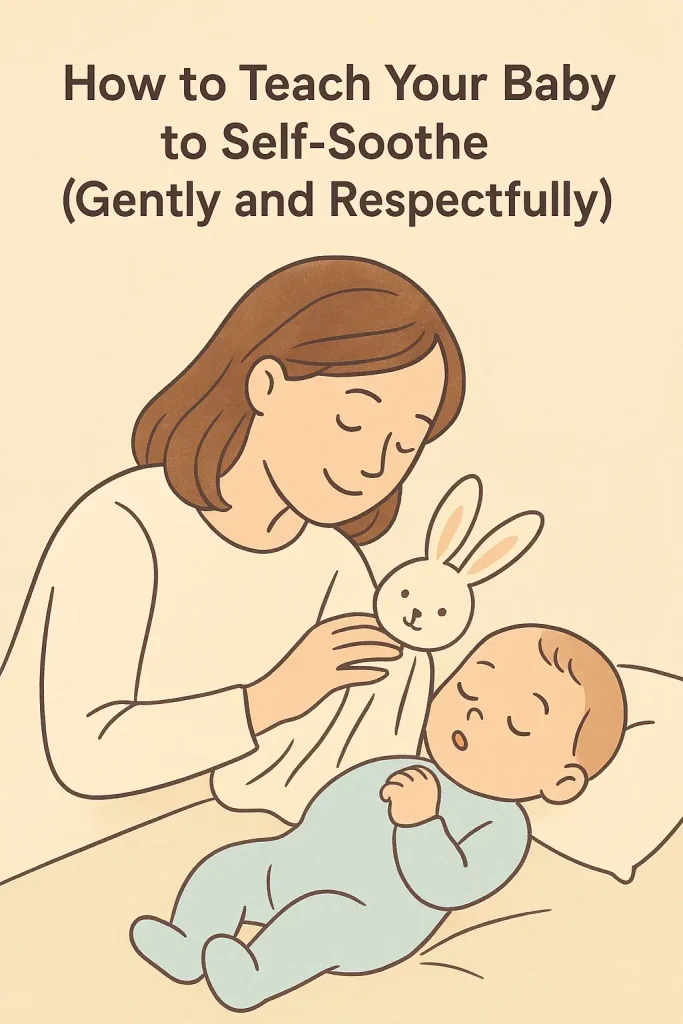
What Is Baby Self-Soothing?
Self-soothing is the ability for babies to calm themselves when they experience mild stress — such as waking between sleep cycles, feeling overstimulated, or transitioning to sleep.
It often looks like:
- Sucking on hands or fingers
- Holding onto a comfort object
- Turning the head from side to side
- Rubbing their cheeks or ears
- Making soft cooing sounds
These behaviors are normal, healthy, and necessary for emotional development. Self-soothing isn’t an overnight skill; it builds gradually through supportive routines and predictable comfort.
When Do Babies Become Ready to Self-Soothe?
True self-soothing typically emerges around 4–6 months, though every baby develops at their own pace.
Before this age, babies rely heavily on caregivers for regulation. They need rocking, feeding, holding, and shushing — and this is developmentally appropriate. You are not “spoiling” them by responding.
From 4 months onward, infants begin:
- Discovering their hands
- Using repetitive movements
- Forming early sleep associations
- Developing predictable sleep cycles
This is an ideal time to begin gentle, respectful self-soothing habits.
Why Self-Soothing Matters
Teaching a baby to self-soothe supports:
- Longer stretches of sleep
- Easier bedtime routines
- Stronger emotional regulation as they grow
- Lower nighttime stress for both baby and parent
- Healthier sleep associations (less dependence on constant rocking, feeding, or motion)
And importantly — when approached gently — it builds secure attachment rather than harming it.
How to Teach Your Baby to Self-Soothe (Gently & Respectfully)
1. Create a Predictable, Calming Bedtime Routine
Babies thrive on predictability. A simple routine teaches your baby’s brain to recognize that sleep is coming.
A gentle routine may include:
- Warm bath
- Dim lights
- Soft music or white noise
- Feeding
- Quiet cuddle or rocking
- Introducing a comfort object, such as a lovey
This consistency is one of the most effective infant sleep tips for building confidence and security.
2. Use a Comfort Object to Encourage Regulation
A comfort object (also called a lovey or security item) offers a sense of safety when caregivers aren’t immediately present.
Benefits include:
- Emotional grounding
- Familiar scent
- Physical softness that reduces stress
- Encouragement of independent soothing
A small, breathable, soft lovey is ideal for this purpose. Many parents choose items like a bunny lovey, which babies find comforting to hold and rub as they fall asleep.
If you’re looking for a safe, baby-friendly option, the Katiia Joy Lovey on Amazon is designed with two calming layers (cotton + crystal velvet), perfect for supporting early self-soothing.
3. Introduce the Lovey During Calm, Happy Moments
A baby should connect the lovey with positive comfort — not stress — so introduce it:
- During feedings
- During snuggles
- While reading a bedtime book
- While rocking before sleep
Keep it close to your body for a few days so it carries your comforting scent.
This association becomes a powerful emotional anchor.
4. Practice “Rhythmic Soothing” Instead of Full Sleep Support
Instead of rocking your baby fully to sleep, try slowing down your support.
For example:
- Rock until drowsy, not asleep
- Shift from rocking to holding
- Shift from holding to gentle patting
- Shift from patting to stillness
This teaches baby that they can finish the final step (falling asleep) with less assistance.
5. Use Gradual Withdrawal — Not Cry-It-Out
Gentle self-soothing does not require crying it out.
Instead, try:
The Chair Method (Gentle Version)
- Sit next to the crib
- Offer touch, voice, rhythmic pats
- Each night, move the chair further away
- Over 1–2 weeks, transition to minimal support
Babies learn confidence with you nearby, not alone.
6. Encourage Hands-to-Mouth Exploration
One of the earliest forms of self-soothing is hand sucking.
Allowing your baby to:
- Find their fingers
- Suck on their hand
- Rub their cheeks
…is normal and helpful for developing emotional regulation.
Over time, this naturally transitions to using a comfort object.
7. Respond When Needed (Responsive Parenting Support Self-Soothing!)
The biggest myth is that responding to your baby prevents independence. Actually:
Responsive caregiving = secure attachment = better self-soothing.
A baby who trusts that you come when needed will:
- Cry less overall
- Settle more easily
- Sleep more consistently
Your presence teaches them the world is safe — and safe babies sleep better.
Signs Your Baby Is Learning to Self-Soothe
You may notice:
- Shorter crying periods between sleep cycles
- Less need for rocking or feeding to sleep
- Grabbing or cuddling their lovey
- Falling asleep faster during bedtime
- More relaxed body movements
Progress is slow but steady. Celebrate small wins!
Common Mistakes to Avoid
- Rushing the process
- Expecting overnight results
- Using overstimulating toys in the crib
- Introducing too many sleep associations at once
- Ignoring your baby’s emotional cues
Gentle teaching comes from connection, not pressure.
How a Lovey Supports Long-Term Emotional Health
A well-chosen lovey:
- Encourages independent regulation
- Helps babies transition between caregivers
- Eases separation anxiety
- Offers grounding during stressful moments
- Creates a positive bedtime association
For this reason, many pediatricians consider a lovey one of the most valuable comfort object tools in early development.
Add a Lovey to Your Baby’s Self-Soothing Routine
If you’re ready to introduce a lovey, choose one that’s:
- Breathable
- Super soft
- Washable
- Safe for crib use
- Easy for small hands to grab
Many parents love our Katiia Joy Bunny Lovey, designed specifically to support self-soothing and emotional comfort. Its soft cotton + crystal velvet fabric makes it ideal for bedtime routines and independent calming.

Final Thoughts
Teaching your baby to self-soothe isn’t about letting them cry alone — it’s about guiding them gently toward emotional confidence and healthy sleep skills.
With predictable routines, a comforting environment, and supportive tools like a lovey, your baby can learn to settle peacefully while still feeling safe and connected.
Self-soothing is a journey, but with patience and love, your baby will develop the skills they need to sleep soundly and grow confidently.